Key concepts to easily understand texts related to heat transfer
Boundary conditions
phrase
Boundary Conditions (condition of a variable on the boundary surface of the system. It is the arbitrary constant in the solution of a differential equation. There are as many Boundary Conditions as the order of the equation).
Example: Boundary and initial conditions in the heat condition. As for another differential equation, the solution is given by the boundary and initial conditions.
en: Condiciones límite
Cylindrical layer
adjective
A cylindrical layer is a solid contained by two concentric cylinders.
Example: If a region of the plane is rotated about an axis parallel to the y-axis in such a way that a solid of revolution is generated, which has as volume differentials cylindrical layers with its axis on the axis of revolution
en: Capa cilíndrica
Emissivity
noun
Emissivity, formerly called emittance, is the ratio of thermal radiation emitted by a surface or object due to its temperature. Spectral directional emissivity is defined as the ratio of the intensity emitted by the surface in a particular direction to the intensity that would be emitted by a black body at the same temperature and wavelength.
Example: The emissivity coefficient (ε) is a dimensionless number that relates the ability of a real object to radiate thermal energy to the ability to radiate if it were a black body.
en: Emisividad
Energy balance
noun
Energy Balance (EB) is defined as the state achieved when energy intake equals energy expenditure and is considered "dynamic" and not "static".1 The concept of energy balance to regulate body weight is a simple principle.
Example: his short paper represents key aspects of the surface ENERGY BALANCE examined during the morning of 19 th June 2006 within a meteorological enclosure.
en: Balance energético
Heat conduction equation
phrase
The heat transferred has a direction as well as magnitude.The rate of heat conduction in a specified direction is proportional to the temperature gradient, which is the change in temperature per unit length in that direction, in the Cartesian system, cylindrical or spherical.
Example: Heat conduction or transfer of energy in the form of heat by conduction is a heat transfer process based on direct contact between bodies, without exchange of matter.
en: Ecuación de conducción del calor
Heat flux
noun
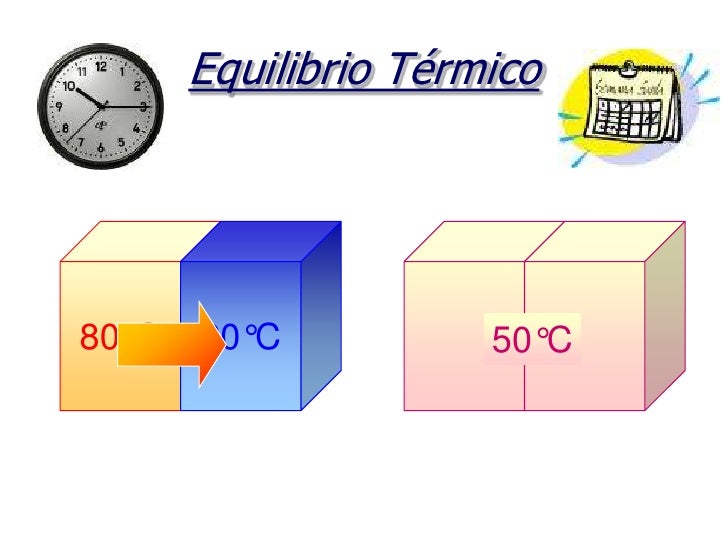
Heat flow is the measure of energy transfer, which is caused by a temperature difference and leads to temperature equilibrium between substances. In this context, energy is called heat.
Example: The second experiment measured sensible HEAT FLUX (H ) by the eddy correlation method. The third experiment measured momentum and HEAT FLUXes by the profile method.
en: Flujo de calor
Heat transfer coefficient
phrase
The total heat transfer coefficient is influenced by the thickness and thermal conductivity of the materials through which heat is transferred. The larger the coefficient, the easier the heat is transferred from its source to the product being heated.
Example: The convective heat transfer coefficient, h, can be defined as: The rate of heat transfer between a solid surface and a fluid per unit area per unit temperature difference. Thermal engineering
en: Coeficiente de transferencia de calor
Insulation
noun
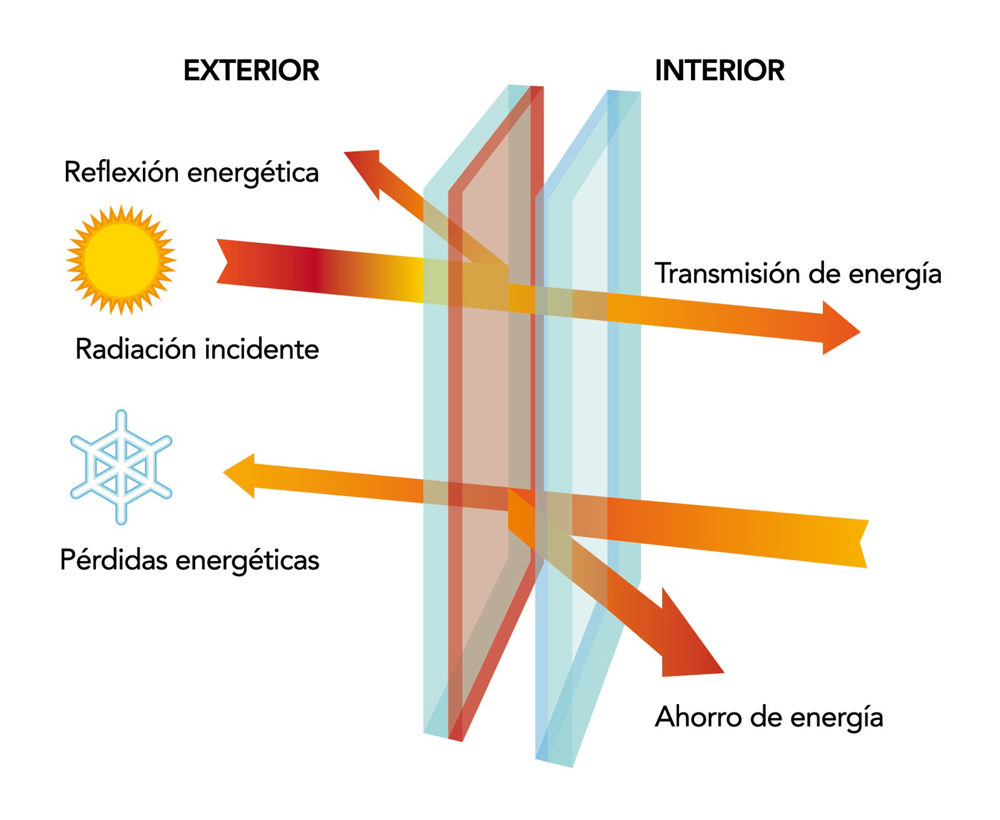
is the set of materials and installation techniques that are applied in the constructive elements that separate an air-conditioned space from the outside or from other spaces to reduce heat transmission between them. It is also used to reduce heat transmission from pipes that transport fluids at different temperatures from the ambient temperature. It is also applied to the action and effect of thermal insulation.
Example: Wall systems (Ching, 2001b) columns and walls, glass construction and masonry walls pre-cast concrete wall panels, concrete framework, concrete columns Connections Pre-cast concrete connections used between the elements (Ching, 2001c) Roof systems reinforced concrete roof slabs pre-cast concrete roof systems Services Thermal INSULATION (Ching, 2001d).
en: Aislamiento
Internal energy
adjective
the internal energy of a system is a reflection of the energy at the macroscopic scale. More specifically, it is the sum of: the internal kinetic energy, i.e. the sums of the kinetic energies of the individual parts that make up a body with respect to the center of mass of the system.
Example: This means the system does work on its surroundings, and the change in INTERNAL ENERGY (U) is equal to the heat added (Q) plus the work done (W). This is also known as the first law of thermodynamics: (5) Equation (5) shows that the heat input for a constant pressure process must therefore be greater than that for a constant volume process, in order to get the same change in INTERNAL ENERGY.
en: Energía interna
Perfect contact
noun
Perfect contact between the surface of a solid and the environment in which it is inserted (convective heat exchange) or between two solids (conductive heat exchange) occurs when the temperatures of the contact surface are equal to each other.
Example: During connection, this profile avoids cuts, scratches or deformations, favoring perfect contact. .
en: Contacto perfecto
Thermal conductivity
adjective
Thermal conductivity is a physical property of materials that measures the ability to conduct heat. In other words, thermal conductivity is also the ability of a substance to transfer the kinetic energy of its molecules to other adjacent molecules or to substances with which it is in contact.
Example: The THERMAL CONDUCTIVITY and thickness of the material determine the rate of heat penetration.
en: Conductividad térmica
Thermal diffusivity
adjective
Thermal diffusivity, in heat transfer problems, is the value obtained by dividing the thermal conductivity of a certain material divided by the product of its density value and its specific heat capacity.
Example: Initial spore load: The severity of the process depends on the initial spore load; good factory hygiene keeps this low. 8.Thermophysical properties : The THERMAL DIFFUSIVITY is the controlling factor.
en: Difusividad térmica
Thermal symmetry
adjective
It occurs as a result of symmetry in the thermal conditions imposed. Where it does not present heat flow in the central plane but to the closest point of the surface.
In the case of cylindrical or spherical bodies it indicates that it has thermal symmetry with respect to the central line, so the derivative of the temperature with respect to r will be zero on the central line.
Example: This article summarizes the main types of Neumann boundary condition. The adiabatic boundary and the thermal symmetry condition are often used in heat transfer problems. Thermal engineering
en: Simetría térmica
Variation
noun
variation is the name given to each of the possible groupings that can be formed with the elements of a given set.
Example: Diurnal temperature variation is a meteorological term that relates to the temperature variation that occurs from daytime highs to cool nights.
en: Variación
Volume
noun
Volume is a scalar metric quantity defined as the extension in three dimensions of a region of space. It is a magnitude derived from length, since in an orthohedron it is found by multiplying three lengths: length, width and height.
Example: Volume is the measure of the space occupied by a body. Its unit of measurement in the international system (I.S.) is the cubic meter (m3).